A Practical Guide to Protecting Capital, Reducing Stress, and Trading Like a Professional
Ask any consistently profitable forex trader what matters most, and you’ll hear the same answer again and again:
Risk management.
And at the heart of risk management lies one simple but powerful tool:
👉 Stop loss.
Ironically, stop loss is also the most misunderstood, misused, and emotionally resisted part of forex trading. Many traders either:
- Place stop loss too tight and get stopped out constantly, or
- Place stop loss too wide (or none at all) and blow their account.
The problem isn’t stop loss itself.
The problem is not knowing how to choose a smart stop loss.
This article will teach you:
- What a stop loss really is
- Why most traders place it incorrectly
- Different stop loss methods (and when to use them)
- How professionals think about stop loss
- How to align stop loss with strategy, psychology, and market structure
No shortcuts. No hype. Just smart execution.
What Is a Stop Loss (Really)?
A stop loss is not:
- A sign you’re wrong as a trader
- A punishment from the market
- A failure point
A stop loss is:
👉 The price level where your trade idea is proven invalid
Professionals don’t ask:
“How much can I afford to lose?”
They ask:
“At what price is my analysis no longer valid?”
That mindset changes everything.
Why Most Forex Traders Use Stop Losses Poorly
Let’s be honest.
Most traders place stop losses based on:
- Random pip counts (20 pips, 50 pips, etc.)
- Emotions
- Fear of loss
- Broker margin rules
- What someone else told them
This leads to:
❌ Frequent stop-outs
❌ Frustration
❌ Overtrading
❌ Revenge trading
A smart stop loss is logical, not emotional.
The Core Purpose of a Smart Stop Loss
A smart stop loss does three things:
- Protects your capital
- Respects market structure
- Keeps you psychologically stable
If it fails one of these, it’s not smart—no matter how “safe” it feels.
Stop Loss vs. Position Size (Critical Relationship)
This is where many traders get confused.
👉 Stop loss placement and position size must work together.
You do NOT:
- Decide lot size first
- Then randomly place stop loss
You DO:
- Decide stop loss location (based on logic)
- Adjust position size to match your risk %
Smart traders never move stop losses to fit their lot size.
They move lot size to fit stop loss.
Types of Stop Loss Strategies (and When to Use Them)
There is no universal stop loss.
There are context-based stop losses.
Let’s break them down.
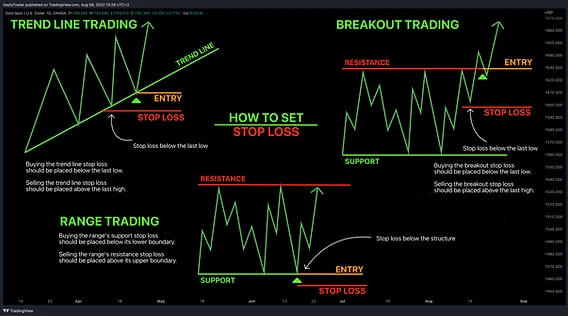
1. Structure-Based Stop Loss (Most Professional)
This is the gold standard.
What It Is
Stop loss placed beyond key market structure, such as:
- Swing highs / lows
- Support and resistance
- Trend structure
- Breakout levels
Why It Works
If price breaks structure, your trade idea is invalid.
That’s logical—not emotional.
Example
- Buying in an uptrend
- Stop loss below the last higher low
If that low breaks, the trend logic fails.
Pros
✔ Logical
✔ Respects market behavior
✔ Reduces random stop-outs
Cons
❌ Can require wider stops
❌ Needs proper position sizing
2. Volatility-Based Stop Loss (ATR Method)
Markets breathe. Volatility matters.
What It Is
Stop loss based on Average True Range (ATR) or volatility measures.
Example:
- Stop = 1.5x or 2x ATR from entry
Why It Works
- Avoids tight stops in volatile markets
- Adapts to changing conditions
Best For
- Swing trading
- News-sensitive pairs
- Trend-following systems
Pros
✔ Adaptive
✔ Reduces noise stop-outs
Cons
❌ Less precise than structure
❌ Needs testing
3. Time-Based Stop Loss
Sometimes price doesn’t move—not against you, but nowhere.
What It Is
You exit a trade if:
- Price doesn’t reach target within a defined time
Why It Works
Stagnation = opportunity cost.
Best For
- Day trading
- News fade strategies
- Momentum setups
Pros
✔ Prevents capital stagnation
✔ Reduces emotional attachment
Cons
❌ Doesn’t protect against sudden spikes
4. Fixed Pip Stop Loss (Least Smart, But Common)
Example:
- Always using 20 or 30 pips
Reality Check
This ignores:
- Volatility
- Structure
- Market conditions
Fixed stops can work only if:
- Strategy is built around them
- Position size adapts
- Market conditions are consistent
Pros
✔ Simple
✔ Easy to automate
Cons
❌ High stop-out rate
❌ Ignores context
Why Tight Stop Losses Often Fail
Many traders think:
“Smaller stop = safer trade”
Wrong.
Tight stops:
- Sit in market noise
- Get hunted during liquidity grabs
- Increase emotional stress
Professionals prefer:
👉 Logical stops + small position size
Not:
👉 Tiny stops + big lots
Stop Loss Hunting: Myth vs. Reality
Is stop hunting real?
Yes—but not how retail traders imagine.
Institutions don’t hunt you.
They hunt liquidity.
Stops placed:
- Exactly at obvious highs/lows
- At round numbers
- Without buffer
…are more likely to be hit.
Smart Adjustment
Place stops:
- Beyond structure
- With volatility buffer
- Not at obvious levels
The Psychological Side of Stop Loss
Your stop loss must match your emotional tolerance.
If you:
- Panic when price nears stop
- Move stop loss emotionally
- Close early due to fear
Then your risk is too high.
A smart stop loss:
✔ Feels uncomfortable
❌ Does not feel terrifying
Fear is a sizing problem—not a stop problem.
Trailing Stop Loss: Use With Care
Trailing stops can:
- Lock profits
- Reduce risk
- Improve expectancy
But they can also:
- Cut winners too early
- Reduce R:R ratios
Best Trailing Methods
- Structure-based trailing
- Break-even after structure confirmation
- Partial profits + trailing remainder
Avoid mechanical trailing without context.
Stop Loss vs. Take Profit (Balance Matters)
Stop loss alone doesn’t define profitability.
Your risk-reward ratio matters.
Example:
- Stop loss = 50 pips
- Take profit = 150 pips
- R:R = 1:3
Even with a 40% win rate, you can be profitable.
Smart stop loss placement supports positive expectancy.
Common Stop Loss Mistakes (Very Costly)
- Moving stop loss further away
- Removing stop loss entirely
- Using same stop for all pairs
- Tightening stops after losses
- Placing stops at obvious levels
- Ignoring volatility
- Using stop loss to manage emotions
Stop loss is not a therapy tool.
How Professional Traders Think About Stop Loss
Professionals ask:
- Where is my idea wrong?
- Is this loss acceptable?
- Does this trade fit my system?
- Am I risking survival?
They accept losses as:
👉 Business expenses
Not personal failures.
Building a Smart Stop Loss Process (Step-by-Step)
- Identify market structure
- Define trade idea invalidation
- Measure volatility
- Add buffer beyond structure
- Calculate position size
- Set stop loss
- Accept the loss before entry
If you can’t accept the loss—don’t enter.
Stop Loss and Account Growth
Small losses = longevity.
Longevity = learning.
Learning = consistency.
Consistency = profit.
Most traders fail not because their stops are too small—but because they don’t survive long enough to improve.
Adapting Stop Loss to Different Market Conditions
- Trending market → wider structure stops
- Ranging market → tighter range-based stops
- High volatility → volatility-adjusted stops
- Low volatility → tighter but logical stops
One-size-fits-all stops don’t work.
Stop Loss in News Trading
News can:
- Spike spreads
- Cause slippage
- Skip stop levels
Smart rules:
- Reduce position size
- Avoid tight stops
- Stay out if uncertain
A smart trader knows when not to trade.
Stop Loss Is Not About Being Right
It’s about:
- Being wrong cheaply
- Staying consistent
- Protecting capital
You don’t need to avoid losses.
You need to control them.
Final Thoughts: Smart Stop Loss = Trader Survival
A smart stop loss is:
- Logical
- Structured
- Emotion-aware
- Strategy-aligned
It is not:
- Random
- Emotional
- Hope-based
- Ego-driven
Forex trading is uncertain by nature.
Stop loss is how you survive uncertainty.
If you master stop loss:
- You reduce stress
- You trade longer
- You improve faster
- You give yourself a real chance to profit
In forex, it’s not the smartest trader who wins.
It’s the one who survives long enough to become smart.
Summary:
Learning to place smart stop loss is essential in winning in Forex. Putting a static 100 pip stop loss may not work very well in every situation. Hence I learned some advance ways and would like to share them with you:
Keywords:
forex, signal, free, ozfx
Article Body:
Here is step by step guide:
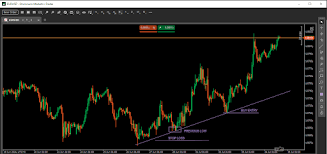
- If price is close to recent high or low then place SL 5-10 pips above or below that point. This is very important. Prices do go back to test recent highs and lows and we need to set SL as per the recent price action. Trading on daily chart is bit tricky where such SL can be even 30-40 pips more on top of your static 100 pip SL.
- Another point to take care is that don�t place SL on important boundary numbers such as 00 or 50 mark. These points are tested often and you can easily be stopped out.
- Place your stop loss on odd numbers excluding 1 and 9. Never place SL on even numbers.
Believe It or Not!!!
Let me surprise some of you by saying that Brokers HUNT for your SL. That�s true. Forex is unlike Dow where everything is run by one organization and prices don�t vary from broker to broker (those broker makes money by giving you a worse fill than you would expect + commissions). Brokers in Forex can manipulate prices as they like and hence they go after your SL.
Now why brokers will want to you to loose?? Well every time you open a position, a broker opens an opposite position. So when you loose they win. They also want you trade more often, since they make money either in commission or spreads (or both). The only way they can force you to trade again is to stop you out.
Why you think brokers give out free market research and trading ideas?? If all of their traders are trading the same way then it is easier for them to take them out.
I am sure that some people would disagree (the ones working for broker J ) but it is something to think about.
So How To Beat The Brokers:
Simple, don�t place any Stop Loss. That�s right. It is not a typo. What you need is a Mental SL. You should know at price you will take your losses and set up alarms on your trading station when the price reach close to the mental SL you had in place. This can be challenging for some people but if you are lucky enough to get this working then there is nothing like it.
Hope this helps you in placing better SL from now on.


Tinggalkan Balasan